
Styrene-Butadiene-Styrene (SBS) is a thermoplastic elastomer widely used in asphalt modification to improve elasticity, flexibility, and resistance to permanent deformation. SBS modified asphalt is commonly used in road construction and maintenance, where consistent performance under different temperature conditions is essential.
However, maintaining these properties requires more than selecting the appropriate SBS grade and formulation. Storage temperature, heating duration, and repeated heating and cooling can also influence the performance of the modified asphalt. Understanding these factors helps manufacturers and downstream users maintain material quality during storage and application.
1. Why Does Storage Temperature Matter for SBS Modified Asphalt?
SBS modified asphalt is a multiphase system consisting of the base asphalt and dispersed SBS polymer. After absorbing lighter components from the asphalt, SBS particles swell and develop a three-dimensional network structure. This structure contributes to the improved elasticity and high-temperature deformation resistance of the modified binder.
Nevertheless, this polymer network is sensitive to thermal exposure.
At elevated temperatures, prolonged heating may accelerate SBS molecular chain degradation. Repeated heating and cooling can also affect the compatibility and structural stability between the polymer and asphalt phases.
These changes may lead to:
Therefore, controlling storage temperature and minimizing unnecessary heating cycles are important considerations in the handling of SBS modified asphalt.
2. How Do Different Storage Conditions Affect SBS Modified Asphalt?
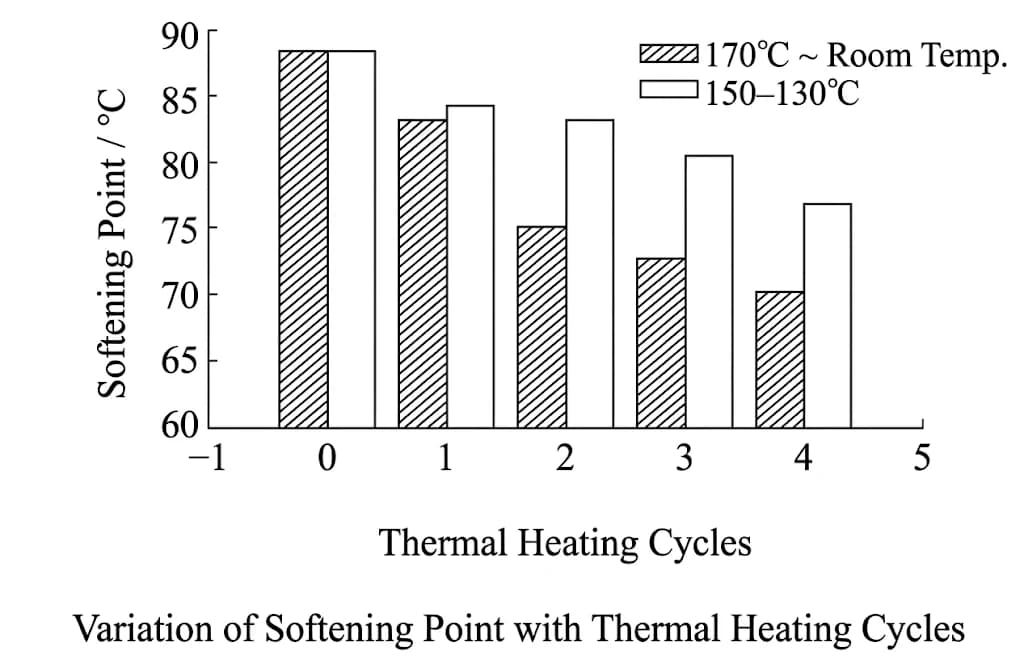
The effects of storage conditions can be evaluated by comparing different heating and cooling cycles. One laboratory study examined SBS modified asphalt containing 5.0% SBS under two simulated storage conditions:
| Storage condition | Temperature cycle |
| High-temperature storage | 170°C for 1 day, followed by cooling to room temperature |
| Medium-temperature storage | 150°C for 1 day, followed by 130°C for 1 day |
The results showed that repeated storage cycles affected both the high- and low-temperature properties of SBS modified asphalt. As the number of cycles increased, the tested samples showed declining softening points, rotational viscosity, zero-shear viscosity, penetration, and ductility.
The extent of performance deterioration differed between the two conditions. Overall, the 170°C-to-room-temperature condition caused more significant performance deterioration than the 150°C-to-130°C condition as the number of storage cycles increased.
3. Key Performance Changes During Repeated Heating
Several indicators can be used to evaluate the performance stability of SBS modified asphalt. Among them, softening point, penetration, rotational viscosity, and zero-shear viscosity provide useful information about changes in its rheological properties.
High-temperature performance
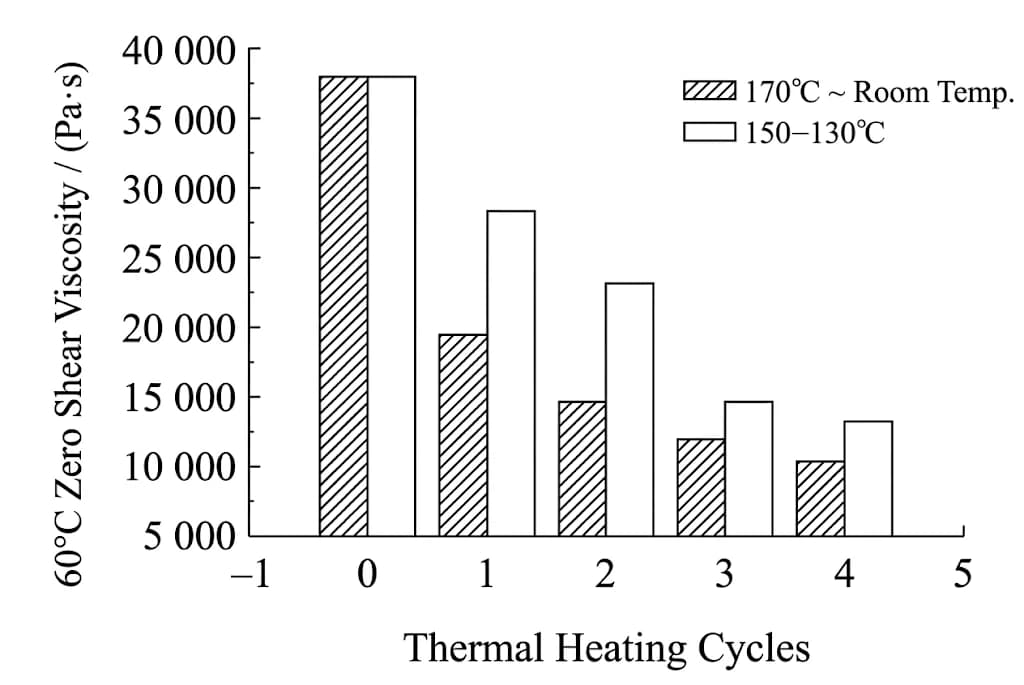
Repeated heating generally reduced the softening point, rotational viscosity, and 60°C zero-shear viscosity of the tested SBS modified asphalt. These changes indicate a reduction in its resistance to deformation at elevated temperatures.
Among the evaluated indicators, 60°C zero-shear viscosity showed the greatest sensitivity to repeated storage cycles. It was therefore identified as the primary indicator for monitoring high-temperature performance deterioration in the study.
Low-temperature performance
Penetration and ductility also decreased as the number of heating cycles increased. Lower penetration values indicate that the asphalt becomes harder, while reduced ductility suggests a decline in its ability to deform without cracking.
The 170°C storage followed by cooling to room temperature produced more significant changes, indicating a greater risk of low-temperature performance deterioration under this storage regime.
Fatigue resistance
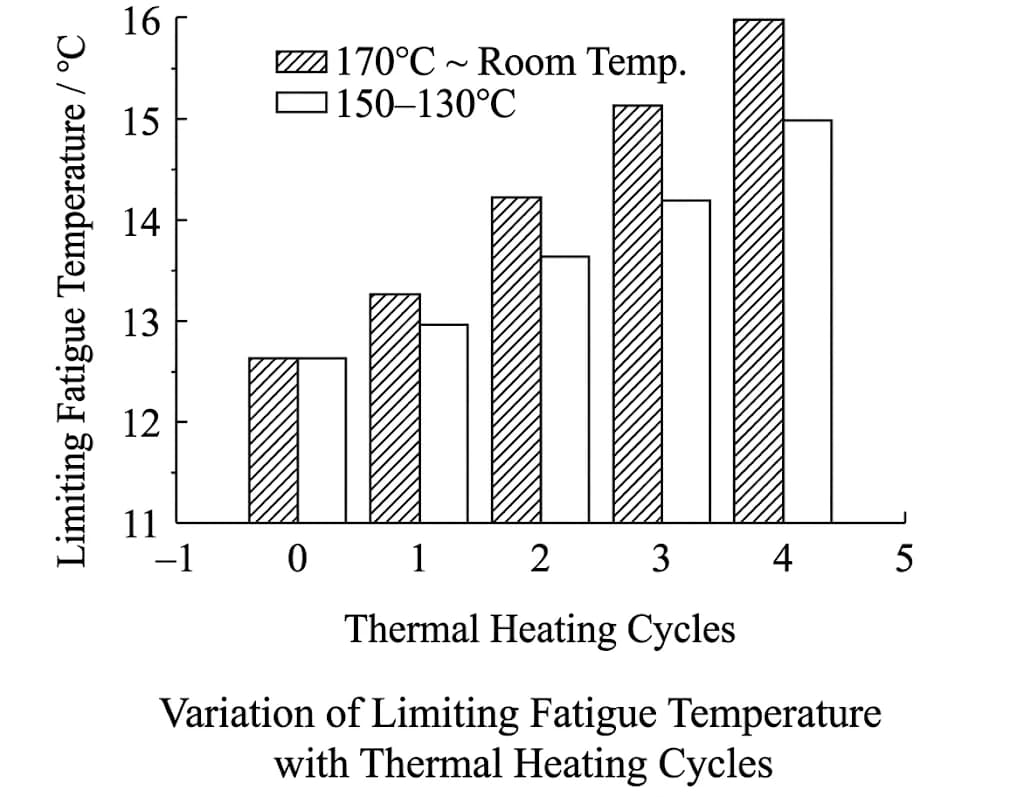
DSR testing also revealed a decline in fatigue resistance following repeated heating cycles. The limiting fatigue temperature increased as the number of cycles increased, indicating poorer fatigue performance.
Overall, these results demonstrate that repeated thermal exposure can affect multiple aspects of SBS modified asphalt performance rather than only its high-temperature properties.
4. Recommended Storage Practices for SBS Modified Asphalt
Based on the laboratory findings, the two-stage warm storage condition (150°C for 1 day followed by 130°C for 1 day) retained material performance better than holding at 170°C and cooling to room temperature.
The study recommended limiting the number of storage cycles to:
These limits were determined based on the performance requirements and experimental conditions used in the study. They should not be treated as universal storage specifications for all SBS modified asphalt formulations.
For practical storage management, several considerations are worth noting:
1. Avoid unnecessary reheating: Repeated heating cycles may accelerate changes in the polymer structure and asphalt properties.
2. Control storage temperature: Avoid prolonged exposure to excessively high temperatures when the material is not being used.
3. Minimize temperature fluctuations: Repeated thermal cycles may contribute to changes in the polymer structure and asphalt properties. Avoiding unnecessary heating and cooling can help limit thermal exposure.
4. Monitor material properties: Softening point, penetration, and viscosity can be used for routine quality checks. Zero-shear viscosity may provide additional insight into high-temperature rheological stability.
Proper storage management helps reduce unnecessary thermal exposure and supports more consistent performance of SBS modified asphalt.
Website: www.elephchem.com
whatsapp: (+)86 13851435272
E-mail: admin@elephchem.com



 Soporta red IPv6