En aplicaciones industriales, el alcohol polivinílico (PVA) suele prepararse en solución acuosa para que desarrolle sus propiedades. Sin embargo, debido a las diferencias en los grados de PVA, el grado de hidrólisis y la forma física, el proceso de disolución suele presentar dificultades como la formación de grumos, espuma o disolución incompleta. Este artículo combina la experiencia técnica profesional para detallar los principios de disolución, los métodos de operación y las técnicas antiespumantes del PVA.
1. Principios de disolución
La disolución del PVA es un proceso de hinchamiento seguido de disolución, y su eficiencia se ve profundamente afectada por la estructura molecular y la forma física:
- Factores que determinan la solubilidad: La solubilidad del PVA está determinada principalmente por su grado de hidrólisis, grado de polimerización y forma.
- Efecto del grado de hidrólisis: a medida que disminuye el grado de hidrólisis, la temperatura de disolución del PVA disminuye y su solubilidad en agua aumenta.
◊ Tipo totalmente hidrolizado: depende en gran medida de la temperatura; por debajo de cierta temperatura, no se disolverá o solo se hinchará parcialmente.
◊ Tipo parcialmente hidrolizado: aunque es más fácil de disolver, las temperaturas excesivamente altas pueden provocar fácilmente la formación de espuma y grumos.
- Efecto de la morfología: El PVA en polvo (malla 20-100) tiene una mayor área de superficie, por lo que su tiempo de disolución es aproximadamente la mitad que el del PVA granular.
2. Problemas técnicos en la preparación de soluciones de PVA
Para preparar soluciones de PVA de alta calidad y evitar la contaminación, se deben tener en cuenta las siguientes configuraciones de hardware y parámetros:
2.1 Selección de equipo
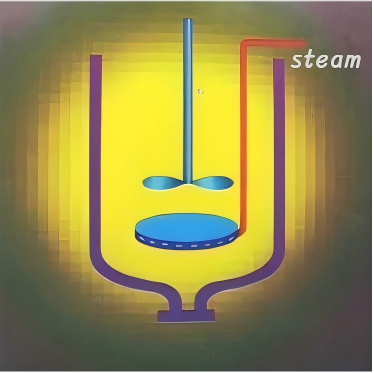
Se debe utilizar un recipiente de reacción con agitador. El material debe ser acero inoxidable, esmalte o hierro revestido con resina sintética para evitar que la oxidación y la corrosión química contaminen la solución de PVA.
2.2 Control de velocidad de agitación
La velocidad de agitación debe ajustarse con precisión según las especificaciones de PVA y el tipo de agitador:
- Agitador espiral de doble ala: se recomiendan 500-1000 rpm para tipos totalmente hidrolizados; se recomiendan 100-300 rpm para tipos parcialmente hidrolizados.
- Agitador de cuadro: se recomienda 80-150 rpm.
- Advertencia de riesgo: una velocidad demasiado baja puede provocar fácilmente que el PVA se asiente y se aglomere; una velocidad demasiado alta puede arrastrar aire fácilmente y producir una gran cantidad de espuma.
2.3 Método de calentamiento
Se recomienda el calentamiento por inyección directa de vapor (presión de 1-1,5 kg/cm²), complementado con calentamiento por vapor encamisado para reducir significativamente el tiempo. El calentamiento directo con llama abierta está estrictamente prohibido para evitar quemaduras en el fondo del recipiente.
2.4 Temperatura adecuada para preparar la solución de PVA
3. Procedimiento de disolución
Seguir una secuencia científica de adición de materiales y aumento de la temperatura puede prevenir eficazmente la formación de grumos:
- Etapa de preparación: Agregue una cantidad medida de agua a temperatura ambiente (se recomienda aproximadamente 30 °C) al tanque de disolución.
- Adición y dispersión del material: Comience a remover (se recomienda una velocidad ligeramente mayor) y agregue lentamente el PVA. Cuanto más lenta sea la adición, mejor para evitar la formación de grumos.
- Tratamiento para la hinchazón: revuelva y disperse completamente durante aproximadamente 30 minutos para permitir que el PVA se hinche por completo.
- Calentamiento y disolución: Aumente gradualmente la temperatura hasta alcanzar la temperatura adecuada según la tabla anterior y manténgala agitando durante 1-2 horas. Para los tipos parcialmente hidrolizados, el calentamiento debe ser lento para evitar la formación de espuma y el desbordamiento.
- Inspección del producto: Después de obtener una solución completamente transparente, filtre las impurezas antes de usar.
4. Principio de formación de espuma y métodos antiespumantes
La formación de espuma es el factor de interferencia más común en la disolución de PVA, especialmente común en productos medianamente hidrolizados y parcialmente hidrolizados.
4.1 Mecanismo de formación de espuma
- Liberación de aire: el PVA es una sustancia porosa y sus poros contienen aire y sustancias volátiles como metanol y ésteres restantes de la producción.
- Diferencias estructurales: El PVA parcialmente hidrolizado presenta espacios vacíos más grandes que el PVA completamente hidrolizado. Tras absorber agua, libera el aire de los poros, formando espuma.
- Actividad superficial: Las soluciones acuosas parcialmente hidrolizadas tienen una mayor actividad superficial, lo que reduce la tensión interfacial gas-líquido, y la solución tiene una cierta viscosidad, aumentando la resistencia mecánica de la película de líquido, dificultando la desaparición de la espuma.
4.2 Métodos antiespumantes
- Método de inmersión física: Antes de disolver el PVA, remoje y hinche en agua fría para liberar el aire de los poros y luego aumente gradualmente la temperatura. Esto puede suprimir eficazmente la formación de espuma.
- Método de funcionamiento intermitente: Si se forma espuma, apague inmediatamente el vapor y haga una pausa o reduzca la velocidad de agitación. Una vez que la espuma desaparezca, aumente gradualmente la temperatura y la velocidad de agitación. Repetir este proceso 2 o 3 veces puede reducir significativamente la espuma.
- Método antiespumante químico: Si es necesario, se puede agregar entre 0,01 y 0,05 % (en peso de la solución) de un agente antiespumante, como n-octanol, fosfato de tributilo o agentes antiespumantes de poliéter.
Sitio web: www.elephchem.com
WhatsApp: (+)86 13851435272
Correo electrónico: admin@elephchem.com



 Soporta red IPv6