
SoarnoL DC3203RB Combina las excelentes propiedades de barrera contra gases, la resistencia al aceite y la transparencia del alcohol etilenílico con la resistencia a la humedad y la procesabilidad por extrusión en estado fundido del etileno. Además, dado que Soarnol se compone únicamente de carbono, oxígeno e hidrógeno, no produce gases tóxicos al quemarse, y el calor generado durante la combustión es solo la mitad que el del polietileno, lo que lo convierte en una materia prima de baja carga.
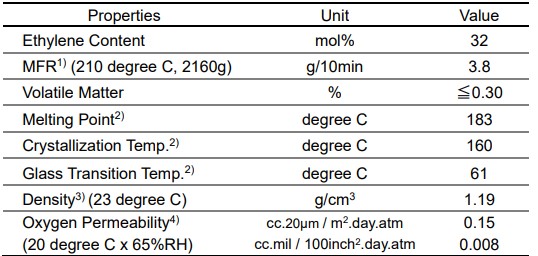
SoarnoL DC3203RB (EVOH EW-3201)Características de rendimiento:
Excelentes propiedades de barrera contra gases: Ofrece excelentes propiedades de barrera contra gases como el oxígeno y el dióxido de carbono, previniendo eficazmente que los alimentos y productos farmacéuticos se deterioren o desarrollen sabores extraños debido a la penetración de oxígeno, prolongando así su vida útil. Por ejemplo, en el envasado de alimentos, los envases que contienen este material pueden extender la vida útil y conservar el aroma de los alimentos durante meses o incluso años sin necesidad de añadir conservantes.
Excelente rendimiento de procesamiento: Al combinar la procesabilidad de los polímeros de etileno con las propiedades de barrera de los polímeros de alcohol vinílico, se puede termoformar utilizando equipos tradicionales de procesamiento de poliolefinas, como extrusión, moldeo por soplado y moldeo por inyección, lo que permite producir fácilmente diversos envases, películas y otros productos.
Excelente resistencia al aceite y a los disolventes orgánicos: Presenta una gran estabilidad en contacto con aceites y diversos disolventes orgánicos, con un aumento mínimo de peso y no se disuelve ni se hincha fácilmente, lo que lo hace adecuado para el envasado de alimentos grasos, cosméticos, productos farmacéuticos y productos que contienen disolventes químicos.
Alta resistencia mecánica y buena resistencia a la abrasión: Posee alta resistencia a la tracción, a la flexión y al impacto, además de una elevada dureza superficial y buena resistencia a la abrasión. Los materiales de embalaje fabricados con este material no se dañan fácilmente durante el transporte, el almacenamiento y el uso, protegiendo así la integridad del contenido.
Buena transparencia y brillo: Los productos de película tienen un alto brillo y poca opacidad, y son altamente transparentes, lo que permite que el producto dentro del envase se vea con claridad, mejorando el efecto de presentación del producto y atrayendo a los consumidores.
Buena estabilidad térmica: Es una de las resinas de barrera fuerte más estables térmicamente entre todas las disponibles comercialmente. Los residuos generados durante el procesamiento pueden reciclarse y reutilizarse, lo que reduce los costos de producción y cumple con los requisitos de protección ambiental.
Cumple con los requisitos de protección ambiental: Es no tóxico e inodoro, y no produce sustancias nocivas al entrar en contacto directo con alimentos, medicamentos, etc., lo que lo hace seguro para la salud humana y el medio ambiente. Además, los materiales de embalaje multicapa que contienen Soarnol EVOH (copolímero de etileno-alcohol vinílico) Pueden reciclarse bajo ciertas condiciones, lo que ayuda a reducir la contaminación por residuos.
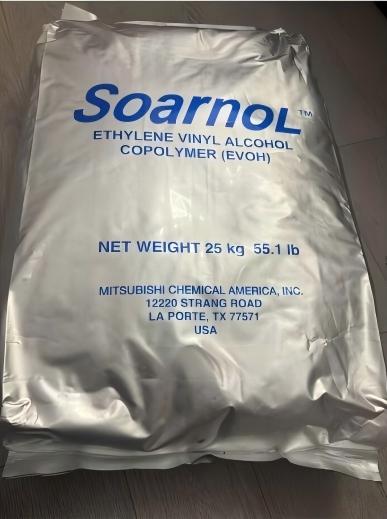
Cuando se utiliza como material de alta barrera, el EVOH se emplea típicamente en una estructura compuesta multicapa. Las estructuras típicas incluyen:
Polietileno de baja densidad/copolímero de etileno-alcohol vinílico/polietileno de baja densidad
PP/AD/EVOH/AD/LDPE
PP/PA/EVOH/PA/AD/PE
PE/AD/PA/EVOH/PA/AD/PE
PA/EVOH/PA/AD/PE
En estas estructuras, AD representa el adhesivo. La estructura compuesta multicapa aprovecha al máximo las propiedades de cada material, mejorando la resistencia al agua del EVOH y dando como resultado un material de alta barrera con un excelente rendimiento general. La mayoría de las estructuras anteriores se utilizan en envases flexibles. Las resinas compuestas como PP, PE y PA, debido a su buena tenacidad pero poca rigidez, son difíciles de cortar, lo que limita su aplicación en envases rígidos, especialmente en productos de llenado en línea. El poliestireno de alta barrera (HIPS) resistente al impacto posee buena rigidez, excelente rendimiento de moldeo y es fácil de perforar, lo que lo hace adecuado para materiales de envases rígidos.
Sin embargo, debido a la escasa compatibilidad entre la resina EVOH y la resina HIPS, y a la importante diferencia en sus velocidades reológicas, los principales problemas que afectan al rendimiento y uso del material compuesto incluyen la fuerza de adhesión entre el sustrato y la resina EVOH, las propiedades de tracción de la resina EVOH durante el moldeo secundario y la uniformidad de la distribución de la capa de resina EVOH durante el calandrado de las láminas compuestas. Estos son también desafíos que deben abordarse en la producción de este tipo de material compuesto. La producción nacional ha sido difícil, lo que ha obligado a realizar importaciones, lo que restringe significativamente los costes y los plazos de entrega. Por lo tanto, el desarrollo de materiales compuestos de resina EVOH de alta barrera, adecuados para envases rígidos, especialmente para el llenado en línea, es particularmente urgente.
Sitio web: www.elephchem.com
WhatsApp: (+)86 13851435272
Correo electrónico: admin@elephchem.com



 Soporta red IPv6