
1. ¿Qué es el vidrio laminado PVB?
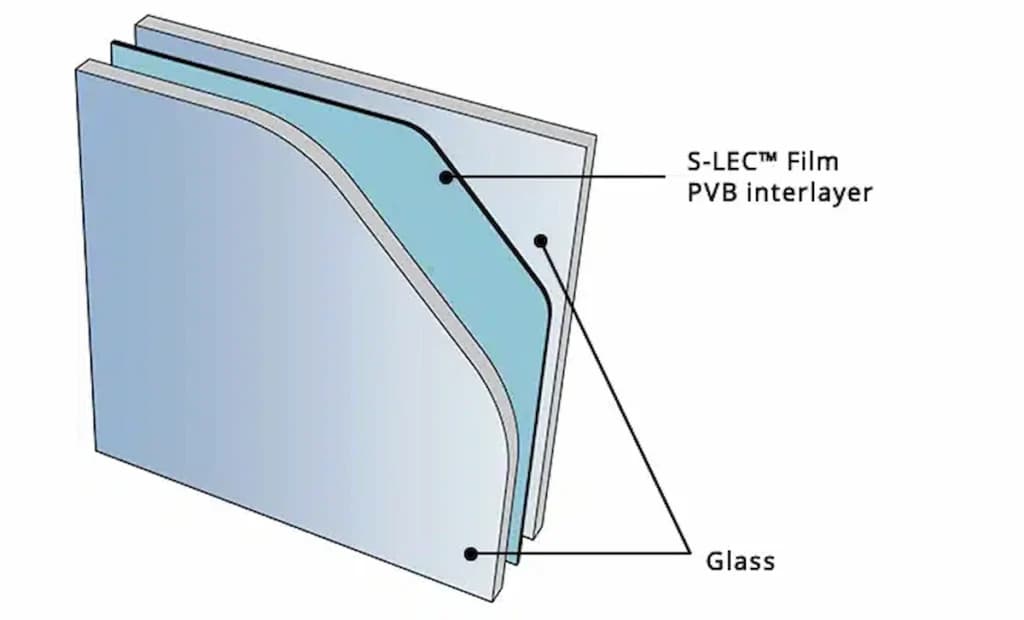
El vidrio laminado, un producto de vidrio de alta seguridad, se fabrica incrustando una capa intermedia especial entre dos capas de vidrio y luego presionándolas juntas mediante un autoclave. Las capas intermedias de PVB se utilizan principalmente en el vidrio laminado. Algunos tipos de capas intermedias están hechas de otros materiales, como EVA (etileno acetato de vinilo)Las capas intermedias de PVB ofrecen ventajas en cuanto a adhesión al vidrio, resistencia a la penetración y resistencia al impacto.
Gracias a su resistencia a la rotura, las láminas intermedias de PVB para vidrio laminado se utilizan ampliamente en áreas que requieren seguridad y protección antirrobo, como parabrisas, ventanillas laterales y vidrio arquitectónico. En la industria automotriz de casi todos los países, incluidos Estados Unidos, Europa y Japón, el vidrio laminado es obligatorio para los parabrisas. Con la creciente demanda de espacios luminosos y abiertos, el papel del vidrio en el confort, el diseño, la seguridad y la protección se expande constantemente. Las láminas intermedias de PVB, como tecnología que puede ampliar las posibilidades del vidrio, están atrayendo cada vez más atención.
2. ¿Qué es la capa intermedia de PVB para vidrio laminado?
Nuestra capa intermedia de PVB para vidrio laminado se utiliza ampliamente a nivel mundial y ofrece los siguientes beneficios:
Alta transparencia: El Película de butiral de polivinilo (película de PVB) Posee una excelente transparencia óptica, lo que permite que el vidrio laminado mantenga una nitidez visual excepcional. Esto es especialmente importante para aplicaciones como parabrisas de automóviles, fachadas de edificios y pantallas de alta gama.
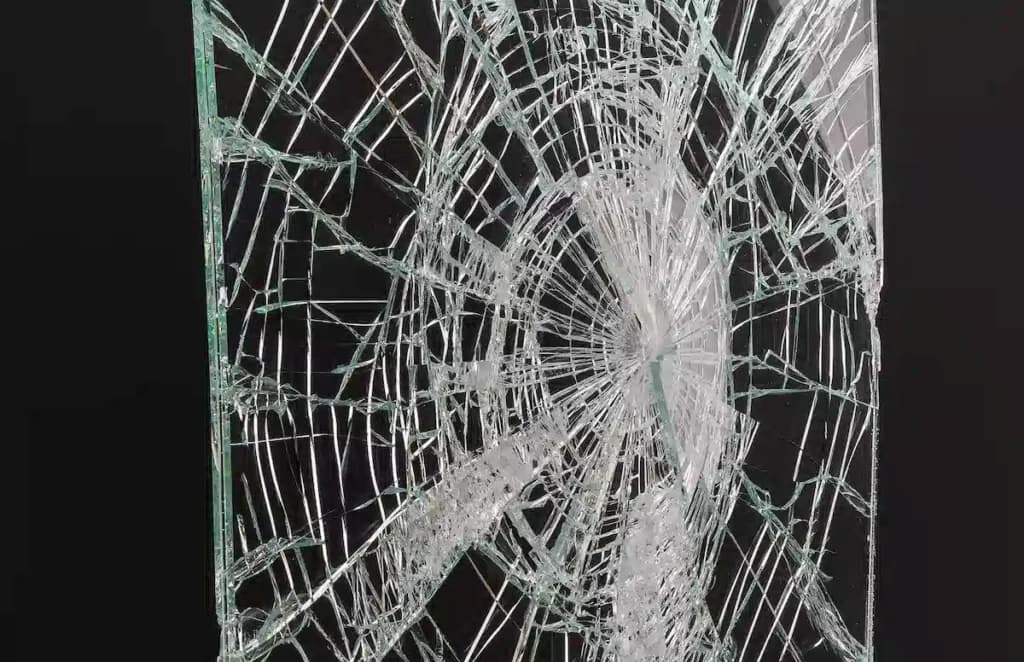
Seguridad y protección: La capa intermedia de PVB posee excelentes capacidades de absorción de impactos. Cuando el vidrio recibe un impacto, la película de PVB absorbe parte de la energía del mismo, reduciendo así el riesgo de rotura. Además, los fragmentos de vidrio roto permanecen unidos por la película de PVB, evitando que se dispersen peligrosamente.
Resistencia a la penetración: El vidrio laminado PVB bloquea eficazmente la penetración de fuerzas externas ante impactos o actos vandálicos. En comparación con el vidrio común, su capacidad de protección es significativamente superior, lo que lo convierte en una opción muy utilizada en bancos, aeropuertos y edificios de alta seguridad.
Protección UV: La capa intermedia de PVB bloquea aproximadamente el 99 % de los rayos UV, protegiendo eficazmente los muebles, suelos y materiales decorativos de interiores de la decoloración causada por la exposición prolongada a los rayos UV. Esta propiedad también protege la piel de los pasajeros en los cristales de los automóviles.
Aislamiento térmico: La estructura laminada reduce la transferencia de calor, mejorando el confort en el interior del hogar o del vehículo. En los edificios modernos de alta eficiencia energética, la combinación de vidrio laminado y vidrio de baja emisividad (Low-E) optimiza aún más la eficiencia energética.
Aislamiento acústico: La película de PVB posee propiedades amortiguadoras, absorbiendo y atenuando las ondas sonoras, lo que confiere al vidrio laminado una ventaja significativa en la reducción del ruido. Esta es una de las principales razones de su creciente popularidad en edificios urbanos y residencias de lujo.
Flexibilidad de diseño: La capa intermedia de PVB permite lograr diversos efectos visuales mediante diseños de color o degradado. Algunos ejemplos son el vidrio laminado de color y el vidrio degradado, ampliamente utilizados en fachadas de edificios, decoración de interiores y vidrio para automóviles.
Compatibilidad con pantalla HUD: En la industria automotriz, el vidrio laminado PVB se puede utilizar junto con los sistemas HUD (pantalla de visualización frontal), lo que permite a los conductores ver directamente la navegación, la velocidad y otra información en el parabrisas, mejorando así la seguridad al conducir.
3. Principales áreas de aplicación de Resina de polivinil butiral (PVB) Vidrio laminado
Industria automotriz
En las industrias automotrices de casi todos los países, incluidos Estados Unidos, Europa y Japón, las estructuras laminadas de PVB son el estándar para los parabrisas de automóviles.
Entre sus principales ventajas destacan:
Mayor seguridad en la conducción
Prevención de la dispersión de fragmentos de vidrio
Compatibilidad con la tecnología de visualización HUD
Provisión de aislamiento acústico y protección UV
Con el desarrollo de vehículos inteligentes, el papel de la capa intermedia de PVB en el vidrio de los automóviles está adquiriendo cada vez mayor importancia.
Industria de la construcción
En el campo de la construcción, el vidrio laminado PVB se utiliza comúnmente para:
Construcción de muros cortina
Tragaluces
Barandillas de balcones
Barandillas de escalera
Vidrio a prueba de explosiones y balas
No sólo mejora la seguridad del edificio, sino que también mejora el aislamiento acústico y la eficiencia energética.
Vidrio de seguridad especial
En escenarios con requisitos de seguridad extremadamente altos, como:
Cristal de mostrador de banco
Vitrinas de museos
Vidrio de seguridad para aeropuertos
Vidrio a prueba de balas
La estructura laminada de PVB mejora eficazmente el nivel de protección.
Sitio web: www.elephchem.com
WhatsApp: (+)86 13851435272
Correo electrónico: admin@elephchem.com



 Soporta red IPv6